

Ankle Foot Orthoses (AFO’s)

An ankle-foot orthosis, or AFO, is a support intended to control the position and motion of the ankle, compensate for weakness, or correct deformities. AFO’s can be used to support weak limbs, or to position a limb with contracted muscles into a more normal position. In addition, AFOs are used to control foot drop caused by a variety of neurologic and musculoskeletal disorders. Due to the common use for addressing foot drop, AFO has become synonymous with the term “foot-drop brace”.
The goal of AFO use is to stabilize the foot and ankle and provide toe clearance during the swing phase of gait. This helps decrease the risk of catching the toe and falling.
A typical AFO creates an L-shaped frame around the foot and ankle, extending from just below the knee to the tips of the toes. AFO’s are usually custom molded to an individual wearer or in some cases custom built around the wearer, and can be fabricated of a variety of materials, including heat-moldable plastics, metal, leather and carbon composite. Different AFO designs are intended to address specific purposes and can be separated into 3 main categories:
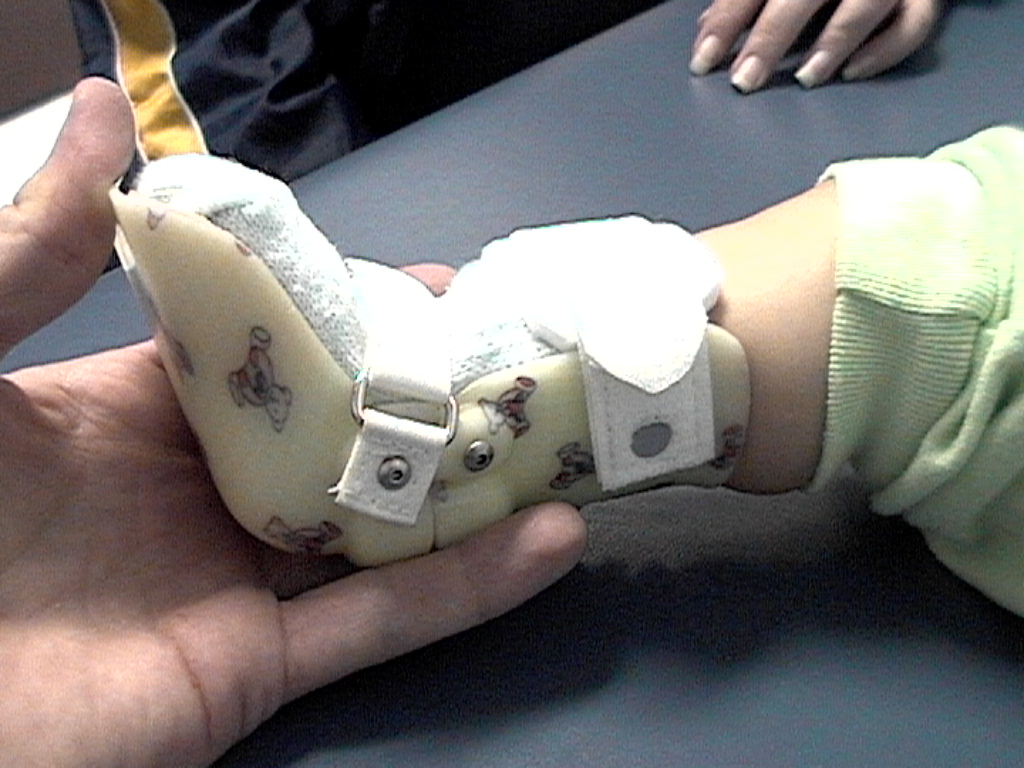
Traditional Thermoplastic AFO
A thermoplastic AFO is usually a custom fabricated, molded plastic device. It is designed to enclose the back of the calf and bottom of the foot, and can be fabricated with or without ankle motion. A thermoplastic AFO is generally for patients that suffer from a neurological or orthopedic conditions. Some examples include: CVA (Stroke), MS (Multiple Sclerosis), CP (Cerebral Palsy), Traumatic Brain Injury, ALS (Amyotrophic Lateral Sclerosis). A Thermoplastic AFO is also an excellent choice if the patient requires extra ankle stabilization and protection against sprains in addition to the underlying issues. Patterns and colors are also readily available on thermoplastic AFO’s.
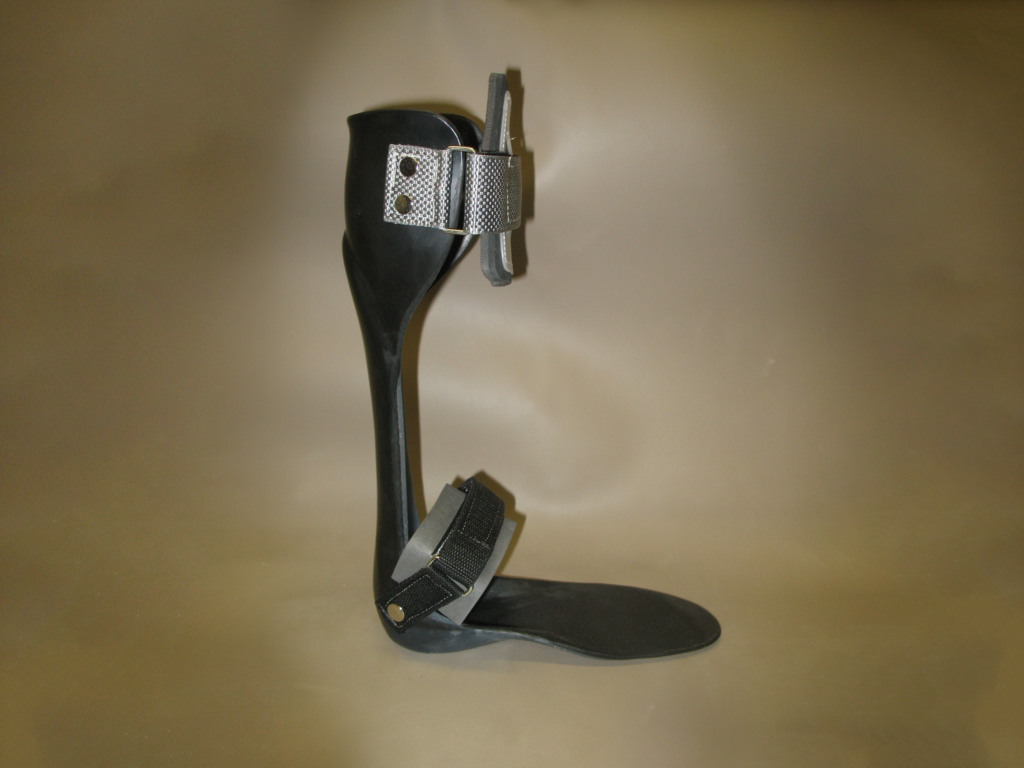
Carbon Composite/Flexible AFO
These orthoses are advanced AFO’s that use the principle of energy storage and return (ESR) to allow for a much more natural movement. More traditional AFO designs rely on completely blocking motion in certain directions to achieve their goal where flexible AFO’s rely on much lower forces of resistance to guide the ankle in the correct direction. This allows the user to make use of their full range of motion while getting the benefits of having their motion restricted in a dynamic fashion. These devices are more suited to patients who present with mild to moderate foot drop, those with variable requirements or those who require smaller corrective forces to help during gait.

Metal/Leather (Conventional) AFO
A conventional AFO is usually a double upright, metal device, with a leather-covered band at the calf. The ankle joints may be adjustable to control ankle motion or assist with toe pickup. The joints attach to a metal stirrup that is fastened directly to the shoe but may be attached to a removable plastic or metal footplate that slides into a shoe. A conventional AFO is often used where swelling of the leg and foot is present or there is a risk of sores on the foot. While still popular with some patients, this type of brace is becoming less popular as more modern and lighter designs become available.