
Orthopedic Shoe Modifications
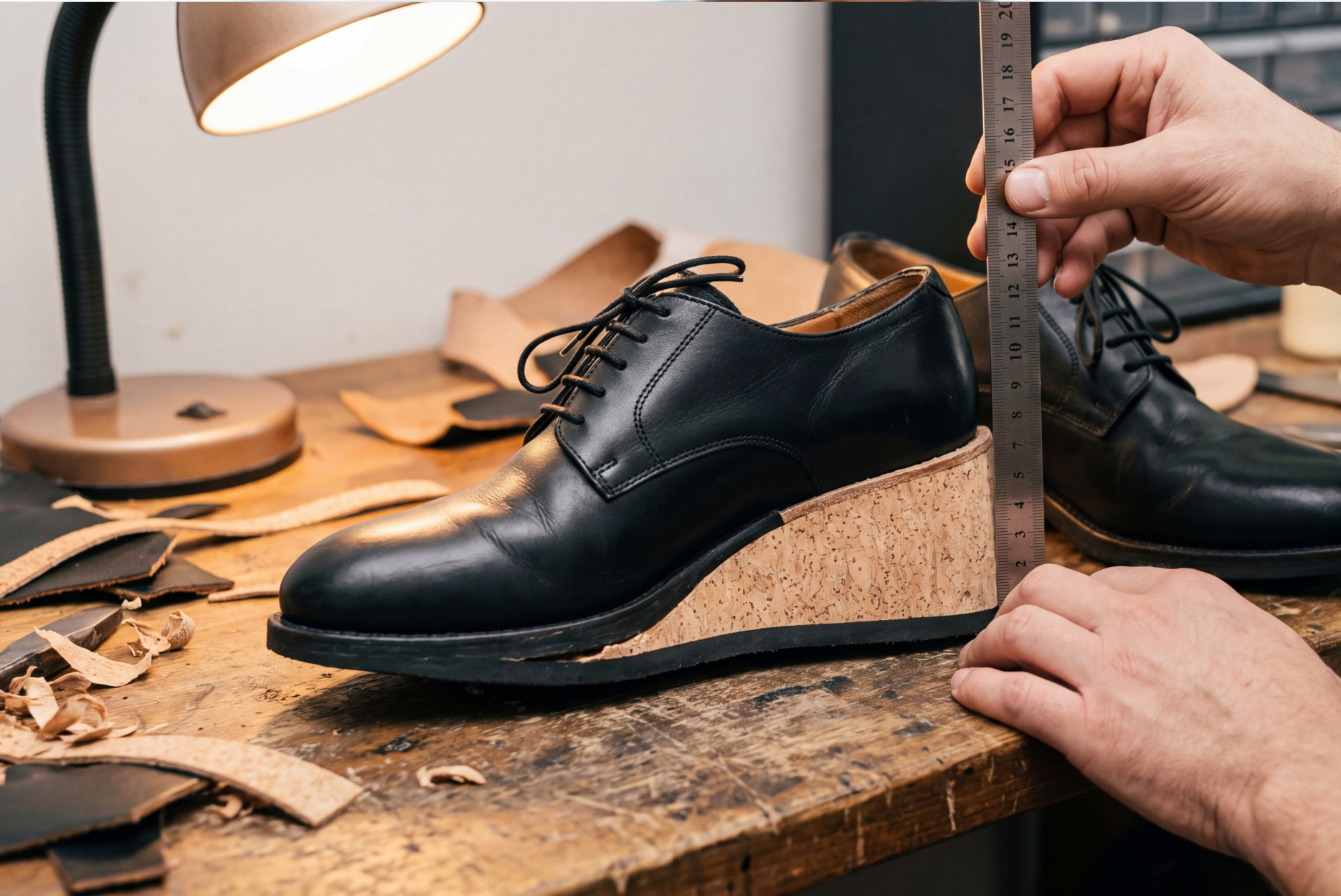
Orthopedic Shoe Modifications. Even after the ‘best fitting’ shoe is found, it still may not fit well enough for a successful orthotic treatment plan. The footwear may need further modifications that can be simple or complex.
Lift
Additional material is added either internally or externally to a shoe to add height to one side; this is usually applied when a structural leg length difference is determined.
Stretching
Stretching the upper of a tight-fitting shoe to offer more room can reduce painful pressure to a hammer toe or bunion; the use of a professional shoe stretcher, a wooden shoe stretcher, or a ball-and-ring stretcher can be helpful.
Buttress/ Flare
This is rubber material added to the outside of the shoe to bolster up the shoe support and offer a wider base of support.
Rocker sole
Your Orthotist can grind a smooth forward roll onto the shoe when your foot has limited or painful ROM at the forefoot
Closure modification
This is a permanent external modification of the upper of the shoe to change its closure. Examples include the addition Velcro straps, buckles, or lacing changes such as lock lacing.
Excavations
This is a hole which is drilled out of the midsole of the shoe from the inside to create a well or hollow for a soft tissue lesion, bony prominence, or sensitive area.